Plantar fasciitis: what a pain in your heel!! If you have been struggling with heel pain and the orthotics and stretches given by your doctor aren’t fixing the problem, keep reading. The latest research shows that women and men develop plantar fasciitis for different structural reasons and therefore should receive different interventions. It is vital to receive a thorough examination to determine what is contributing to that pesky heel pain. Giving everyone the same stretches leads to conditions becoming chronic and people living with pain for years.
The plantar fascia is a broad sheath of connective tissue on the bottom of your foot that stabilizes your arch. It transfers force from the Achilles tendon into the ground and stabilizes the foot. The plantar fascia is one of the strongest tissues in the body. It may be strong, but it causes problems for a lot of people! Plantar fasciitis affects more than 10% of the population, and over 2 million physician visits a year are for plantar fascia pain.
Plantar fascial injuries are significantly more common in women who are twice as likely to develop this frustrating foot pain. Females are also more likely to develop chronic plantar fascial pain because they respond less favorably to conventional treatment programs.
Why is this the case? Women have notably stiffer plantar fascia then men. Males have significantly stiffer Achilles tendons then women. Stiff connective tissue is more prone to injury. This helps explain why women are twice as likely to injure their plantar fascia while men are more prone to Achilles tendon injuries.
The most common treatment for plantar fasciitis is calf stretching which will increase Achilles flexibility but will not alter the plantar fascial tension. While men’s heel pain often responds favorably to calf stretching, it probably doesn’t help most women who already have flexible Achilles tendons. Women need alternate stretches that specifically focus on lengthening their plantar fascia.
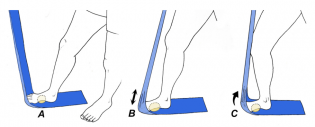
The most effective way to reduce stiffness in the plantar fascia is to stretch while adding a modest amount of pressure to the tissue. For the ideal plantar fascial stretch, you will need a small foam ball and a firm elastic band. (Please refer to picture 1).
- Place the center of your arch on top of a soft foam ball that is positioned on a firm elastic band.
- Use your body weight to compress the ball into your arch
- Move your toes up and down against resistance provided by the elastic band for 12 repetitions.
- Hold a plantar fascia stretch by bending your knee and using the band to keep the toes fixed in an upward position. Hold the stretch for 45 seconds.
- Repeat this routine 3 times.
- Do twice a day.
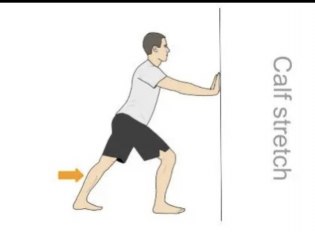
Targeted plantar fascial stretches are crucial for treating most women’s heel pain. Men usually need to prioritize improving calf and Achilles tendon flexibility. Medial calf tightness is a proven contributing factor to plantar fasciitis. The best way to lengthen the calf muscle is to perform long-duration stretching. (Please refer to picture 2).
- Massage the inside portion of the calf muscle for two minutes using a foam roller or massage gun.
Hold a calf stretch for 60 seconds. Repeat three repetitions
Do twice a day.
When treating plantar fasciitis both men and women will need strengthening of the small muscles in the feet. Soft tissue work can also improve outcomes in people with chronic plantar fasciitis. Manual therapy coupled with stretching and strengthening exercises is an effective method to resolve plantar fasciitis and prevent future flare-ups.
In our office, a thorough examination will determine if Achilles tendon and calf tightness or plantar fascia tension is contributing to your plantar fasciitis. Dr. Iodice will create an individualized treatment program to improve flexibility and relieve your heel pain!
References: Michaud, Tom. Evidence-Based Treatments for Managing Plantar Fasciitis: Why Men and Women Should Receive Different Interventions. Human Locomotion
Picture 1